

How to Get Around Reykjavík
22. júní 2026
How to Get Around Reykjavík
22. júní 2026
Charming, compact, and easy to explore, Reykjavík is one of Europe’s most manageable capital cities for visitors. Many major destinations can feel overwhelming to navigate in the beginning. By contrast, figuring out how to get around Reykjavík is refreshingly straightforward once you know your options. Still, a little preparation can go a long way. From exploring the city centre to travelling beyond the capital, understanding local transport can make your Iceland trip smooth, seamless, and stress-free.
Do You Need to Rent a Car in Reykjavík?
For many travellers, the default impulse when visiting a new country is to rent a car as soon as they arrive at the airport. Sometimes it’s the right move. A rental car can be an excellent choice for a multi-day road trip through remote fjords, rural landscapes, or hard-to-reach regions.
However, if you are mainly staying in the capital area, renting a car is not usually necessary. In fact, keeping a vehicle in central Reykjavík can sometimes add small inconveniences to an otherwise relaxing holiday. The historic heart of the city is a compact area of narrow, colourful streets, one-way lanes, and pedestrian-friendly spaces. Parking can be limited, highly regulated, and divided into colour-coded zones where hourly fees may add up quickly. In winter, drivers also need to be prepared for icy roads, reduced visibility, and sudden changes in wind and weather.
A car-free trip makes trips much simpler, with the Reykjavík city infrastructure built for easy walking and smooth transport connections. For many visitors, skipping the rental means less time worrying about parking and road conditions, and more time enjoying the city itself.
Getting From Keflavík Airport to Reykjavík
Many Iceland trips begin at Keflavík International Airport (KEF), located roughly 50 kilometres (31 miles) from the capital. Because it sits well outside the city, travelling from KEF Airport to Reykjavík is often your first experience of Icelandic transport. Fortunately, this initial transfer is relatively straightforward.
For many travellers, the easiest and most reliable choice is the Flybus. Instead of following a standard commuter timetable, Flybus departures are coordinated with international flight arrivals, day and night. If your flight is delayed, you can board the next available Flybus. To secure a spot, Keflavík Airport recommends booking bus tickets in advance.
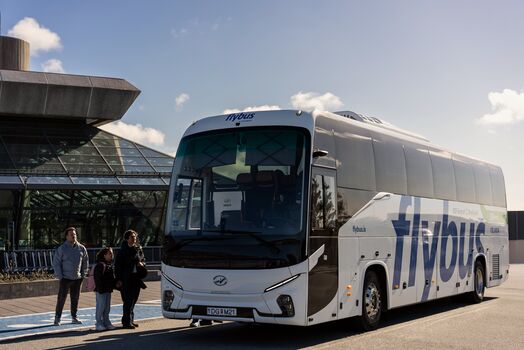
After leaving the arrivals hall, Flybus coaches are easy to find directly outside the terminal. The journey to Reykjavík takes around 45 minutes and brings you to BSÍ Bus Terminal, close to the city centre. On board, travellers can expect a comfortable transfer with free Wi-Fi and USB charging. Flybus also offers hotel pick-up and drop-off options for those who want an even more convenient connection.
Flybus is one of the smoothest ways to reach the capital, but it is not the only option. Strætó Route 55 also runs between Keflavík Airport and the capital area daily. However, this public bus route is not timed around individual flights and can take longer depending on the schedule and stops. Taxis are available outside the terminal building, too, but they are a much more expensive way to travel.
How to Get Around Reykjavík: Top Transport Options
After settling into your accommodation, figuring out how to get around Reykjavík is an enjoyable part of the capital experience. As the city blends historic charm with modern efficiency, it offers a variety of transport methods tailored to different travellers. Ultimately, the best way to get around depends on your plans, budget, the weather, and whether you’re staying downtown or farther out. Here’s how each option works—and who it’s best for.
Walk Around Central Reykjavík
Best for: Active travellers who want to soak up the city centre atmosphere, architecture, and cultural highlights at their own pace.
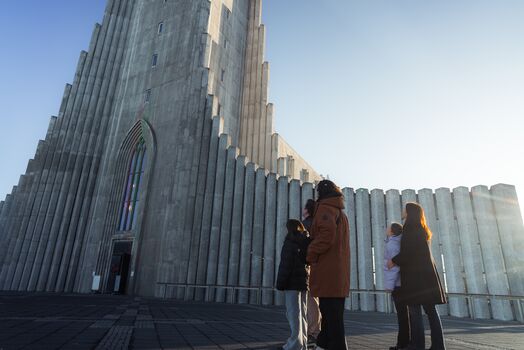
The simplest and most budget-friendly way to explore the heart of the Reykjavík city area is on two feet. Fortunately, the city centre is compact, relatively flat, and easy to navigate, with many major attractions close to one another. Hallgrímskirkja, Harpa Concert Hall, the Old Harbour, and the main shopping streets can all be combined into an enjoyable self-guided walk. Laugavegur and Skólavörðustígur are particular highlights, lined with independent boutiques, colourful corrugated-iron houses, cosy cafés, galleries, and design shops.
Exploring on foot means wandering without worrying about parking, traffic, or bus timetables. Even if you’re learning how to get around Reykjavík during the crisper winter months, walking around is a pleasant experience. Many of Reykjavík’s busiest streets are geothermally heated, which helps keep key areas clearer in snowy or icy weather.
Use the Hop-On Hop-Off Sightseeing Bus
Best for: First-time visitors, families, short-stay travellers, and anyone who wants easy sightseeing without planning complex routes or walking long distances in unpredictable weather.
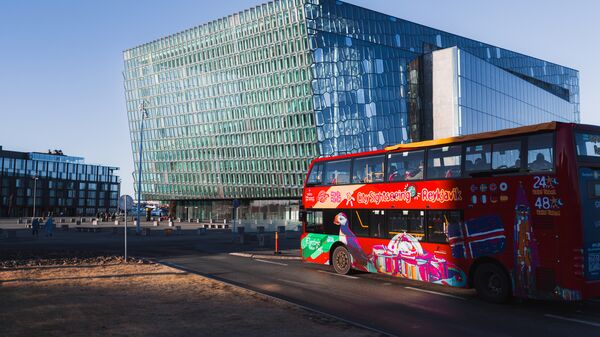
For an easy, comfortable introduction to the city, the hop-on hop-off sightseeing bus is a convenient choice. The red double-decker buses follow a set route around many of Reykjavík’s key cultural landmarks and visitor attractions. It makes it surprisingly simple to get your bearings, even on your first day. This is much easier than navigating public transport for sightseeing, and more affordable than relying on taxis between attractions.
Hop-on hop-off bus sightseeing strikes a useful balance between independence and structure. The route is planned, but you can explore each stop at your own pace before rejoining a later bus. A 24-hour pass gives you the flexibility to hop on and off throughout the day. Meanwhile, the multilingual audio guide adds context about Reykjavík’s history, culture, and landmarks as you travel. The service currently covers 16 stops around the city, including major highlights and popular attractions.
It is also a practical option when the Icelandic weather is windy, wet, or simply hard to predict. When it starts to pour, you can stay on board, enjoy city views, and simply step off once conditions improve.
Rent an Electric Scooter or Bicycle
Best for: Short city trips, flexible exploring, solo travellers, and pleasant-weather days when you want to cover ground quickly.
For quick journeys across town or leisurely rides along the waterfront, electric scooters and bicycles are a fun, flexible way to get around. Shared e-scooters, including those available through Hopp, can be unlocked using a smartphone app. Bike rentals are also available in central Reykjavík. Best of all, the city has a growing network of cycle paths, including scenic routes that follow parts of the coastline.
Riding an electric scooter or bicycle is a practical way to get around Reykjavík on your own terms. On a bright summer afternoon, it can be an enjoyable way to travel between the city centre and areas such as the Grandi harbour district. Two-wheel travel is especially useful if you want to stop for cafés, galleries, museums, or sea views along the way.
That said, scooters and bicycles are best suited to fair weather. Strong winds, heavy rain, snow, or icy paths can make riding uncomfortable or unsafe.
Get on the Strætó City Buses
Best for: Budget travel, reaching neighbourhoods outside the city centre, and visitors staying in accommodation away from central Reykjavík.
For travellers looking to venture beyond the immediate historic streets, local public transportation is reliable and affordable. The yellow city buses, operated by Strætó, connect central Reykjavík with surrounding districts, swimming pools, residential areas, and shopping centres. Bus routes run through key transport hubs, making it possible to plan cross-town journeys without needing a car.

To use the system, passengers rely on Klapp, the ticketing system used on Strætó buses in the capital area. Pay with a contactless card, use the Klappið app to buy tickets or passes, or scan a physical Klapp card, keychain, or Klapp ten ticket. Cash is no longer accepted on capital-area buses, so it is worth sorting your payment method before boarding. Once set up, buses are a budget-friendly answer for figuring out how to get around Reykjavík beyond the city centre.
Hail a Local Taxi
Best for: Late-night journeys after buses stop running, travellers with heavy luggage, and direct, door-to-door convenience.
International ride-sharing platforms such as Uber and Lyft do not operate in Iceland. Instead, visitors rely on official local taxi companies for direct journeys across the city. Taxis can usually be found at designated ranks outside major hotels, near transport hubs, and in busy central areas. Several Reykjavík taxi companies also operate around the clock, making taxis a useful backup when other transport options are less convenient.
However, taxis are not the best way to get around Reykjavík if you are travelling on a tight budget. Fares are calculated using official meters and are generally more expensive than city buses, airport coaches, or sightseeing services. That said, a taxi can be a practical choice during sudden rainstorms, late-night weekends, or when you are managing heavy luggage. Card payments are widely accepted, so you can usually pay securely by contactless credit or debit card inside the vehicle.
Travelling Outside Reykjavík
While knowing how to get around Reykjavík is essential for your city stay, the wider Icelandic landscape often calls for a different approach. Depending on your travel style, confidence, and itinerary, there are three main ways to explore beyond the capital.
Many travellers prefer day tours from Reykjavík to visit iconic regions such as the Golden Circle or the South Coast. Tours remove the pressure of navigating rural roads, checking weather alerts, and planning every stop, especially during the winter months. Guides manage the route and itinerary, so you can focus on the scenery, gain local insights, and relax between stops.

Renting a car gives you the greatest level of independence. If you’re travelling to remote fjords or the Highlands, driving offers the flexibility to linger at viewpoints and take spontaneous detours. It is best suited to travellers confident in driving in changing weather conditions and comfortable managing their own schedule.
Regional public buses can also be useful for reaching nearby towns or travelling between settlements. However, routes and timetables may be limited, particularly outside the busiest travel periods, so this option usually requires more careful planning.
Essential Tips for Getting Around Reykjavík Like a Local
Whether you’re spending a quick stopover or three days in Reykjavík, these practical tips will help you navigate the capital smoothly. These make it easy to decide how to get around Reykjavík during your trip.
- Dress for the Weather, Not the Transport: Icelandic weather is famously changeable. Even a short walk to a bus stop can expose you to sudden wind, rain, or sleet. Always carry a reliable waterproof outer layer and dress in warm, versatile layers.
- Book Your Airport Transfers in Advance: Do not wait until you land at Keflavík Airport to sort out your transport into the city. Booking Flybus tickets online helps secure your seat, saves time after arrival, and makes the journey into Reykjavík more straightforward.
- Understand Designated Tour Pickup Points: To minimise traffic and emissions, large tour coaches use designated pick-up and drop-off points in parts of central Reykjavík. If you booked a day excursion, do not automatically expect pick-up from your accommodation. Instead, you may need to walk to one of the city’s clearly marked tour bus stops.
- Use Apps to Track Bus Times and Tickets: If you are using Strætó city buses, sort out your payment method before boarding and check route information before you travel. The Klapp ticketing system is used on capital-area buses. Live route information can help you plan around weather, traffic, or timetable changes.
- Avoid Long-Distance Taxis for Budget Travel: Taxis can be useful for short, direct journeys, late-night travel, or heavy luggage, but they’re costly for longer distances. Relying on them for regional journeys or last-minute airport transfers can quickly affect your travel budget.
- Plan Around Winter Daylight: If your trip falls between November and February, remember that daylight is limited, especially around December and January. Plan major sightseeing, independent walks, and outdoor travel during the brightest part of the day. Save indoor museums, cosy cafés, restaurants, and city transport for the darker hours.
FAQs
How to get around Reykjavík without a car?
The easiest way to get around Reykjavík without a car is to walk around the compact city centre. For longer distances across the capital area, Strætó city buses offer an affordable public transport option.
What's the best way to travel from the main airport to downtown Reykjavík?
The most reliable option is the Flybus airport coach, which is connected with flight arrivals, so seats are guaranteed. It transfers passengers directly to the central BSÍ Bus Terminal in approximately 45 minutes.
What are the public transportation options in Reykjavík for tourists?
For convenient sightseeing, the hop-on hop-off sightseeing buses are the premier choice, connecting cultural landmarks on a flexible 24-hour loop. Visitors can also use the local Strætó city buses to access neighbourhoods and attractions situated outside the immediate city centre.
Can you walk everywhere in Reykjavík?
Yes, the majority of central attractions, shopping streets, and dining hotspots are located within the compact city centre. However, you will need to use buses, scooters, or taxis to reach outlying attractions like Perlan or the Grandi area comfortably.
What is the cheapest way to get around Reykjavík?
Walking is entirely free and highly practical for exploring the historic heart of the city. For longer cross-town journeys, taking the Strætó city bus utilizing a single fare is the most wallet-friendly motorised option.
What’s the best way to see Reykjavík in one day?
For one day in Reykjavík, combine a walking tour of the historic centre with a hop-on hop-off bus tour. This allows you to bridge the distance to major landmarks like Hallgrímskirkja and Perlan comfortably, regardless of the weather.


Blogg
Fáðu innblástur! Upplýsingar og góð ráð, áhugaverðir áfangastaðir, skemmtilegar staðreyndar og margt fleira. Bloggið okkar er á ensku en það er stórskemmtilegt engu að síður!


The Silver Circle of West Iceland - Your Guide
You’ve heard of the Golden Circle, but here’s why you should head to Iceland’s western region to explore the msytical Silver Circle tour route.
Lesa bloggHow to Get Around Reykjavík
22. júní 2026
How to Get Around Reykjavík
22. júní 2026
Charming, compact, and easy to explore, Reykjavík is one of Europe’s most manageable capital cities for visitors. Many major destinations can feel overwhelming to navigate in the beginning. By contrast, figuring out how to get around Reykjavík is refreshingly straightforward once you know your options. Still, a little preparation can go a long way. From exploring the city centre to travelling beyond the capital, understanding local transport can make your Iceland trip smooth, seamless, and stress-free.
Do You Need to Rent a Car in Reykjavík?
For many travellers, the default impulse when visiting a new country is to rent a car as soon as they arrive at the airport. Sometimes it’s the right move. A rental car can be an excellent choice for a multi-day road trip through remote fjords, rural landscapes, or hard-to-reach regions.
However, if you are mainly staying in the capital area, renting a car is not usually necessary. In fact, keeping a vehicle in central Reykjavík can sometimes add small inconveniences to an otherwise relaxing holiday. The historic heart of the city is a compact area of narrow, colourful streets, one-way lanes, and pedestrian-friendly spaces. Parking can be limited, highly regulated, and divided into colour-coded zones where hourly fees may add up quickly. In winter, drivers also need to be prepared for icy roads, reduced visibility, and sudden changes in wind and weather.
A car-free trip makes trips much simpler, with the Reykjavík city infrastructure built for easy walking and smooth transport connections. For many visitors, skipping the rental means less time worrying about parking and road conditions, and more time enjoying the city itself.
Getting From Keflavík Airport to Reykjavík
Many Iceland trips begin at Keflavík International Airport (KEF), located roughly 50 kilometres (31 miles) from the capital. Because it sits well outside the city, travelling from KEF Airport to Reykjavík is often your first experience of Icelandic transport. Fortunately, this initial transfer is relatively straightforward.
For many travellers, the easiest and most reliable choice is the Flybus. Instead of following a standard commuter timetable, Flybus departures are coordinated with international flight arrivals, day and night. If your flight is delayed, you can board the next available Flybus. To secure a spot, Keflavík Airport recommends booking bus tickets in advance.
After leaving the arrivals hall, Flybus coaches are easy to find directly outside the terminal. The journey to Reykjavík takes around 45 minutes and brings you to BSÍ Bus Terminal, close to the city centre. On board, travellers can expect a comfortable transfer with free Wi-Fi and USB charging. Flybus also offers hotel pick-up and drop-off options for those who want an even more convenient connection.
Flybus is one of the smoothest ways to reach the capital, but it is not the only option. Strætó Route 55 also runs between Keflavík Airport and the capital area daily. However, this public bus route is not timed around individual flights and can take longer depending on the schedule and stops. Taxis are available outside the terminal building, too, but they are a much more expensive way to travel.
How to Get Around Reykjavík: Top Transport Options
After settling into your accommodation, figuring out how to get around Reykjavík is an enjoyable part of the capital experience. As the city blends historic charm with modern efficiency, it offers a variety of transport methods tailored to different travellers. Ultimately, the best way to get around depends on your plans, budget, the weather, and whether you’re staying downtown or farther out. Here’s how each option works—and who it’s best for.
Walk Around Central Reykjavík
Best for: Active travellers who want to soak up the city centre atmosphere, architecture, and cultural highlights at their own pace.
The simplest and most budget-friendly way to explore the heart of the Reykjavík city area is on two feet. Fortunately, the city centre is compact, relatively flat, and easy to navigate, with many major attractions close to one another. Hallgrímskirkja, Harpa Concert Hall, the Old Harbour, and the main shopping streets can all be combined into an enjoyable self-guided walk. Laugavegur and Skólavörðustígur are particular highlights, lined with independent boutiques, colourful corrugated-iron houses, cosy cafés, galleries, and design shops.
Exploring on foot means wandering without worrying about parking, traffic, or bus timetables. Even if you’re learning how to get around Reykjavík during the crisper winter months, walking around is a pleasant experience. Many of Reykjavík’s busiest streets are geothermally heated, which helps keep key areas clearer in snowy or icy weather.
Use the Hop-On Hop-Off Sightseeing Bus
Best for: First-time visitors, families, short-stay travellers, and anyone who wants easy sightseeing without planning complex routes or walking long distances in unpredictable weather.
For an easy, comfortable introduction to the city, the hop-on hop-off sightseeing bus is a convenient choice. The red double-decker buses follow a set route around many of Reykjavík’s key cultural landmarks and visitor attractions. It makes it surprisingly simple to get your bearings, even on your first day. This is much easier than navigating public transport for sightseeing, and more affordable than relying on taxis between attractions.
Hop-on hop-off bus sightseeing strikes a useful balance between independence and structure. The route is planned, but you can explore each stop at your own pace before rejoining a later bus. A 24-hour pass gives you the flexibility to hop on and off throughout the day. Meanwhile, the multilingual audio guide adds context about Reykjavík’s history, culture, and landmarks as you travel. The service currently covers 16 stops around the city, including major highlights and popular attractions.
It is also a practical option when the Icelandic weather is windy, wet, or simply hard to predict. When it starts to pour, you can stay on board, enjoy city views, and simply step off once conditions improve.
Rent an Electric Scooter or Bicycle
Best for: Short city trips, flexible exploring, solo travellers, and pleasant-weather days when you want to cover ground quickly.
For quick journeys across town or leisurely rides along the waterfront, electric scooters and bicycles are a fun, flexible way to get around. Shared e-scooters, including those available through Hopp, can be unlocked using a smartphone app. Bike rentals are also available in central Reykjavík. Best of all, the city has a growing network of cycle paths, including scenic routes that follow parts of the coastline.
Riding an electric scooter or bicycle is a practical way to get around Reykjavík on your own terms. On a bright summer afternoon, it can be an enjoyable way to travel between the city centre and areas such as the Grandi harbour district. Two-wheel travel is especially useful if you want to stop for cafés, galleries, museums, or sea views along the way.
That said, scooters and bicycles are best suited to fair weather. Strong winds, heavy rain, snow, or icy paths can make riding uncomfortable or unsafe.
Get on the Strætó City Buses
Best for: Budget travel, reaching neighbourhoods outside the city centre, and visitors staying in accommodation away from central Reykjavík.
For travellers looking to venture beyond the immediate historic streets, local public transportation is reliable and affordable. The yellow city buses, operated by Strætó, connect central Reykjavík with surrounding districts, swimming pools, residential areas, and shopping centres. Bus routes run through key transport hubs, making it possible to plan cross-town journeys without needing a car.
To use the system, passengers rely on Klapp, the ticketing system used on Strætó buses in the capital area. Pay with a contactless card, use the Klappið app to buy tickets or passes, or scan a physical Klapp card, keychain, or Klapp ten ticket. Cash is no longer accepted on capital-area buses, so it is worth sorting your payment method before boarding. Once set up, buses are a budget-friendly answer for figuring out how to get around Reykjavík beyond the city centre.
Hail a Local Taxi
Best for: Late-night journeys after buses stop running, travellers with heavy luggage, and direct, door-to-door convenience.
International ride-sharing platforms such as Uber and Lyft do not operate in Iceland. Instead, visitors rely on official local taxi companies for direct journeys across the city. Taxis can usually be found at designated ranks outside major hotels, near transport hubs, and in busy central areas. Several Reykjavík taxi companies also operate around the clock, making taxis a useful backup when other transport options are less convenient.
However, taxis are not the best way to get around Reykjavík if you are travelling on a tight budget. Fares are calculated using official meters and are generally more expensive than city buses, airport coaches, or sightseeing services. That said, a taxi can be a practical choice during sudden rainstorms, late-night weekends, or when you are managing heavy luggage. Card payments are widely accepted, so you can usually pay securely by contactless credit or debit card inside the vehicle.
Travelling Outside Reykjavík
While knowing how to get around Reykjavík is essential for your city stay, the wider Icelandic landscape often calls for a different approach. Depending on your travel style, confidence, and itinerary, there are three main ways to explore beyond the capital.
Many travellers prefer day tours from Reykjavík to visit iconic regions such as the Golden Circle or the South Coast. Tours remove the pressure of navigating rural roads, checking weather alerts, and planning every stop, especially during the winter months. Guides manage the route and itinerary, so you can focus on the scenery, gain local insights, and relax between stops.
Renting a car gives you the greatest level of independence. If you’re travelling to remote fjords or the Highlands, driving offers the flexibility to linger at viewpoints and take spontaneous detours. It is best suited to travellers confident in driving in changing weather conditions and comfortable managing their own schedule.
Regional public buses can also be useful for reaching nearby towns or travelling between settlements. However, routes and timetables may be limited, particularly outside the busiest travel periods, so this option usually requires more careful planning.
Essential Tips for Getting Around Reykjavík Like a Local
Whether you’re spending a quick stopover or three days in Reykjavík, these practical tips will help you navigate the capital smoothly. These make it easy to decide how to get around Reykjavík during your trip.
- Dress for the Weather, Not the Transport: Icelandic weather is famously changeable. Even a short walk to a bus stop can expose you to sudden wind, rain, or sleet. Always carry a reliable waterproof outer layer and dress in warm, versatile layers.
- Book Your Airport Transfers in Advance: Do not wait until you land at Keflavík Airport to sort out your transport into the city. Booking Flybus tickets online helps secure your seat, saves time after arrival, and makes the journey into Reykjavík more straightforward.
- Understand Designated Tour Pickup Points: To minimise traffic and emissions, large tour coaches use designated pick-up and drop-off points in parts of central Reykjavík. If you booked a day excursion, do not automatically expect pick-up from your accommodation. Instead, you may need to walk to one of the city’s clearly marked tour bus stops.
- Use Apps to Track Bus Times and Tickets: If you are using Strætó city buses, sort out your payment method before boarding and check route information before you travel. The Klapp ticketing system is used on capital-area buses. Live route information can help you plan around weather, traffic, or timetable changes.
- Avoid Long-Distance Taxis for Budget Travel: Taxis can be useful for short, direct journeys, late-night travel, or heavy luggage, but they’re costly for longer distances. Relying on them for regional journeys or last-minute airport transfers can quickly affect your travel budget.
- Plan Around Winter Daylight: If your trip falls between November and February, remember that daylight is limited, especially around December and January. Plan major sightseeing, independent walks, and outdoor travel during the brightest part of the day. Save indoor museums, cosy cafés, restaurants, and city transport for the darker hours.
FAQs
How to get around Reykjavík without a car?
The easiest way to get around Reykjavík without a car is to walk around the compact city centre. For longer distances across the capital area, Strætó city buses offer an affordable public transport option.
What's the best way to travel from the main airport to downtown Reykjavík?
The most reliable option is the Flybus airport coach, which is connected with flight arrivals, so seats are guaranteed. It transfers passengers directly to the central BSÍ Bus Terminal in approximately 45 minutes.
What are the public transportation options in Reykjavík for tourists?
For convenient sightseeing, the hop-on hop-off sightseeing buses are the premier choice, connecting cultural landmarks on a flexible 24-hour loop. Visitors can also use the local Strætó city buses to access neighbourhoods and attractions situated outside the immediate city centre.
Can you walk everywhere in Reykjavík?
Yes, the majority of central attractions, shopping streets, and dining hotspots are located within the compact city centre. However, you will need to use buses, scooters, or taxis to reach outlying attractions like Perlan or the Grandi area comfortably.
What is the cheapest way to get around Reykjavík?
Walking is entirely free and highly practical for exploring the historic heart of the city. For longer cross-town journeys, taking the Strætó city bus utilizing a single fare is the most wallet-friendly motorised option.
What’s the best way to see Reykjavík in one day?
For one day in Reykjavík, combine a walking tour of the historic centre with a hop-on hop-off bus tour. This allows you to bridge the distance to major landmarks like Hallgrímskirkja and Perlan comfortably, regardless of the weather.
Blogg
Fáðu innblástur! Upplýsingar og góð ráð, áhugaverðir áfangastaðir, skemmtilegar staðreyndar og margt fleira. Bloggið okkar er á ensku en það er stórskemmtilegt engu að síður!
The Silver Circle of West Iceland - Your Guide
You’ve heard of the Golden Circle, but here’s why you should head to Iceland’s western region to explore the msytical Silver Circle tour route.
Lesa blogg