

Where to Stay in Iceland Without Renting a Car
15. september 2026
Where to Stay in Iceland Without Renting a Car
15. september 2026
The dream of exploring Iceland doesn’t have to mean an endless road trip around the island. Travellers who aren’t planning on renting a car can still see many of the country’s highlights; it just takes a different approach.
The first and most important question is where to stay in Iceland so you can easily reach the sights you came to see. After all, many famous landmarks are scattered across the island, and transportation is much easier from some towns than others. A secluded hotel may sound appealing, but it doesn’t necessarily make for a practical base if tours and public transport are limited.
For many travellers, choosing the right base is key to a relaxed, well-organised holiday.
Before Choosing a Hotel, Work Out How You Will Get Around
Getting around Iceland without a car is definitely possible, but preparation is essential. An important piece of trip advice for first-timers is to understand Iceland’s different transport options and how each one fits into your itinerary.
- Airport Transfers: Scheduled airport buses connect Keflavík International Airport with Reykjavík, making arrivals and departures relatively simple.
- Local Buses: Reykjavík without a car is easy to navigate, thanks to a public bus network covering the city centre and surrounding neighbourhoods.
- Regional Scheduled Buses: Public buses connect towns in different parts of the country, although routes and frequencies usually vary by region and season.
- Domestic Flights: From Reykjavík Airport, there are flights connecting the capital to regional centres like Akureyri in the north. These are useful for visitors who are planning to spend a good chunk of their holiday in another part of Iceland.
- Organised Day Tours: Guided excursions designed for sightseeing depart regularly to major natural attractions, combining transportation with planned itineraries and local commentary.
Remember that not all the buses you’ll encounter serve the same purpose. There’s a difference between Iceland public transport and transport designed for tourism. Regional buses can get you from town to town, but these routes aren’t built around waterfalls, scenic viewpoints, or other visitor stops. If your main goal is to explore, organised day tours will take you straight to the sights.
A Good Car-Free Base Needs More Than a Nice View
When choosing where to base yourself in Iceland, practicality matters just as much as scenery. A picturesque location is certainly appealing, but it should not be the only requirement. If you are not driving, the best area to stay in Iceland should offer everyday conveniences and reliable transport links. Look for a location that provides:
- Regular tour departures.
- Straightforward airport connections.
- Walkable access to restaurants, cafés, and, if possible, a central shopping street.
- Nearby grocery stores, pharmacies, and other everyday services.
- Easy access to local bus stops.
- Access to a range of sightseeing options.
- Museums, cultural attractions, or indoor activities for poor-weather days.
- Places to eat after returning from a long day tour.
Even before booking a hotel in Iceland, spend some time going through your itinerary. Consider how you will reach the property from the airport, where you can eat nearby, and how you will travel to different regions during your stay. Do excursion providers offer pickups close to the accommodation? Will you need an additional bus or taxi to reach the departure point?
A remote hotel in Iceland can be wonderful, but without a car it often requires extra planning. Knowing how your accommodation connects with the rest of your itinerary can make the trip considerably easier.
Why Reykjavík Works So Well as a Car-Free Base
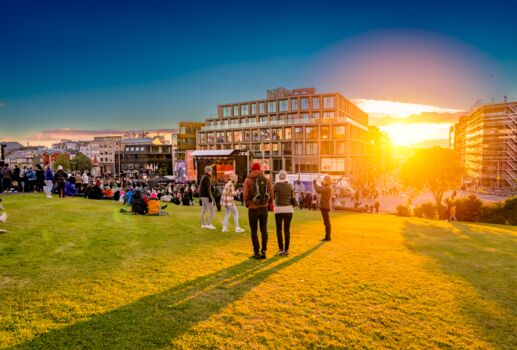
The capital is usually one of the first places travellers consider when deciding where to stay in Iceland. That makes sense for car-free visitors, as the city combines strong transport connections with a wide range of guided excursions. By staying in Reykjavík, it’s possible to explore several iconic regions without changing hotels between each trip.
The most popular Iceland tours from Reykjavík include sightseeing around the Golden Circle and exploring South Coast’s waterfalls, glaciers, and black sand beaches. From here, travellers can soak in geothermal spas, while winter evenings can be spent on Northern Lights tours. On quieter days, the capital itself offers incredible diversity, from coastal walks and museums to shopping streets, cafés, and restaurants.
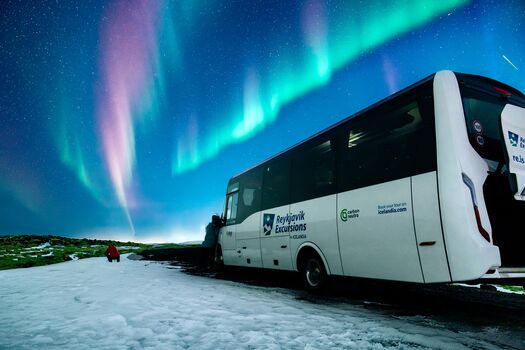
This mix of tour departures, airport connections, and everyday services is what makes Reykjavík especially convenient. A single hotel base lets travellers avoid constantly hauling luggage between towns and checking in and out of different accommodation. Plus, since the city is so well-connected, even three days in Reykjavík can pack a whole lot of sightseeing.
Where to Stay in Reykjavík When Tours Are Your Main Transport
For car-free travellers deciding where to stay in Iceland, choosing Reykjavík is only half the plan. Where you stay within the capital can also make a big difference. When looking for the best area to stay in Reykjavík, focus on two things: access to tour pickup points and everyday practicalities. A well-located hotel should make it easy to reach departure points. At the same time, restaurants, shops, local buses, and even some city attractions should be close by.
Around BSÍ: Best for the Simplest Tour Departures
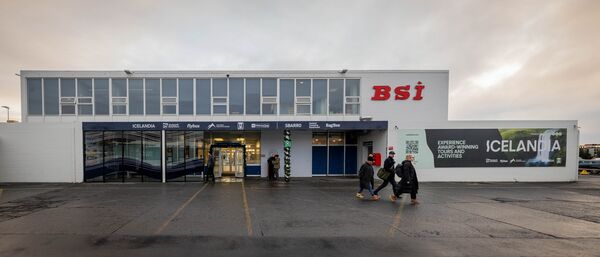
The BSÍ Bus Terminal sits outside Reykjavík city centre and is a key transport hub for airport coaches and many organised tour departures. Staying nearby can be particularly convenient for travellers who want to minimise commuting to the bus stop on early morning tours. It also makes airport transfers easier, especially at the beginning and end of your trip.
Reykjavík City Centre: Best Balance of Sightseeing and Tour Access
The city centre, around Laugavegur shopping street and the harbour, is one of the most convenient areas to stay in Reykjavík. Many restaurants, cafés, shops, and local attractions are right at your fingertips, making it simple to explore even on foot.
Since parts of central Reykjavík have narrow streets and traffic restrictions, large tour coaches cannot stop directly outside every downtown hotel. Instead, designated tour bus stops are positioned around the city centre, often within a short walk of many hotels and guesthouses.
Just Outside the Centre: Often Better Value
Neighbourhoods slightly outside of downtown can offer quieter surroundings and lower rates while remaining connected via public buses or nearby tour stops. When booking in these areas, make sure your hotel is within walking distance of one of the designated pickup locations in Reykjavík. This is especially important for early morning departures, when adding a long walk or extra bus connection can be less convenient.
How Much of Iceland Can You Actually See From Reykjavík?
A common concern for car-free travellers is that staying in the capital will limit how much of Iceland they can see. In reality, a vast range of Iceland tours without a car come from the capital every day. Seamless accessibility is why Reykjavík is usually considered as the best place to stay in Iceland for first-time visitors.
The Golden Circle Is Made for a Reykjavík Day Trip
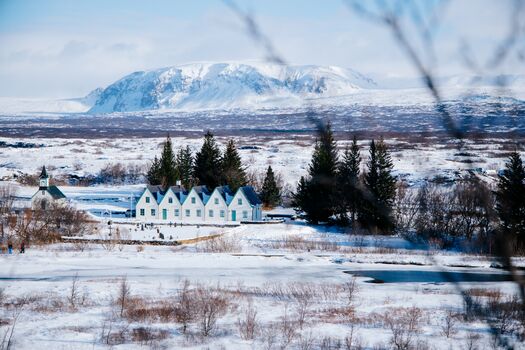
Lying within easy reach of the capital, the Golden Circle is the country’s best-known sightseeing route. Golden Circle tours typically cover three major sites: Þingvellir National Park, the Geysir geothermal area, and the two-tiered Gullfoss waterfall.
For travellers deciding where to stay in Iceland without a car, Reykjavík makes the Golden Circle especially ideal. The relatively compact route is one of the simplest ways to see several major Icelandic wonders in a single day.
The South Coast Is Long, But Still Accessible
South Coast tours are often a longer day trip, but the variety of landscapes along the route makes the journey especially rewarding. Excursions from the capital take travellers past iconic waterfalls like Seljalandsfoss and Skógafoss, black-sand beaches, and views of towering glaciers.
If the floating icebergs of Jökulsárlón Glacier Lagoon are on your bucket list, a day trip from Reykjavík is possible. However, you should expect a very long day of travel with limited time to linger. Alternatively, a two-day guided trip gives you more time to explore the southeast, including Jökulsárlón and nearby Diamond Beach.
You Don't Have to Choose Between Reykjavík and a Rental Car
Some travellers assume they must choose between staying in Reykjavík every night and committing to a full self-drive trip. However, there is a useful middle ground: combining a Reykjavík base with one or more multi-day guided excursions.
In this hybrid approach, you can spend most of your holiday based in the capital. Then, simply join a guided multi-day tour for destinations farther afield, such as Snaefellsnes Peninsula or the glacial lagoons. Professional guides handle the driving, route planning, and day-to-day logistics, while Reykjavík remains your main base before and after the trip. It is the best of both worlds for travellers planning a longer Iceland itinerary without a car.
When Staying Outside Reykjavík Actually Makes Sense
When choosing where to stay in Iceland, Reykjavík usually offers the greatest flexibility for car-free travellers. However, there are situations where basing yourself elsewhere can work well, particularly if one region is the main focus of your trip. The key is to plan around the trade-offs, including fewer transport connections, fewer organised tours, and more limited services.
Akureyri: A Strong Second Base for North Iceland
Located in the north, Akureyri is Iceland’s second-largest urban area and a practical base for travellers focusing on North Iceland. Its compact centre is easy to explore, with restaurants, cultural attractions, and local tour operators all within relatively easy reach. From here, travellers can join excursions to highlights such as Lake Mývatn, Goðafoss waterfall, and whale-watching trips in Húsavík.

Domestic flights operate year-round from Reykjavík Airport, or you can take a six-hour public bus journey along the Ring Road. The trade-off is that Akureyri doesn’t offer the same access to southern routes like the Golden Circle and South Coast. It works best as a second base combined with a Reykjavík-based leg.
Vík: Useful When the South Coast Is the Main Event
Vík is a small coastal village on Iceland’s South Coast and a useful overnight stop for travellers exploring the region. It’s close to Reynisfjara, while also serving as a natural stopping point on longer journeys towards the glacier lagoons. Many guided multi-day itineraries actually include an overnight stay in Vík.
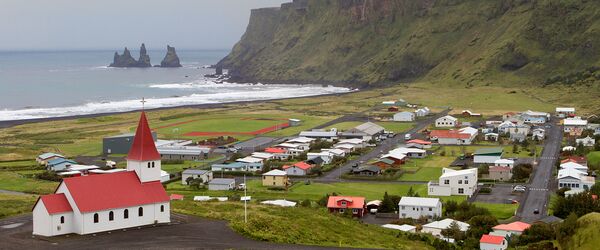
However, its small size means dining choices, public transport connections, and independent sightseeing options are more limited than in Reykjavík. It generally works best as an overnight stop rather than a standalone base for several days.
Keflavík: Convenient for the Airport, Not for Seeing Iceland
Keflavík sits on the Reykjanes Peninsula close to Keflavík International Airport, making it most useful for late arrivals, early departures, or short stopovers. From here, it’s easy to explore parts of the Reykjanes Peninsula or arrange a visit to the Blue Lagoon.
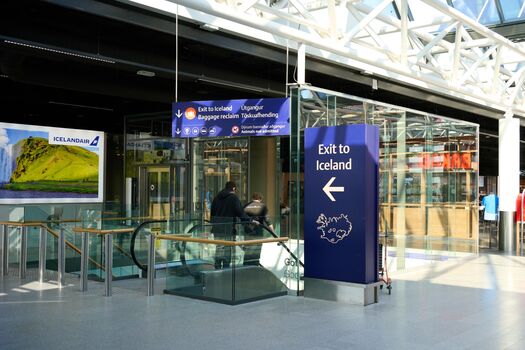
The main drawback is that Keflavík is not a particularly practical base for exploring the rest of Iceland. Tour choices and onward connections are more limited than in the capital, so it’s better as a first or final overnight stop.
Beautiful Places That Are Harder to Use as a Car-Free Base
When deciding where to stay in Iceland, the country’s most scenic regions may look appealing. However, some are better suited to self-drive road trips than independent car-free stays. These include the Snæfellsnes Peninsula, more remote stretches of the South Coast, the Eastfjords, and the Westfjords. They make excellent stops on a road trip, but staying there for several days without a car is often challenging.
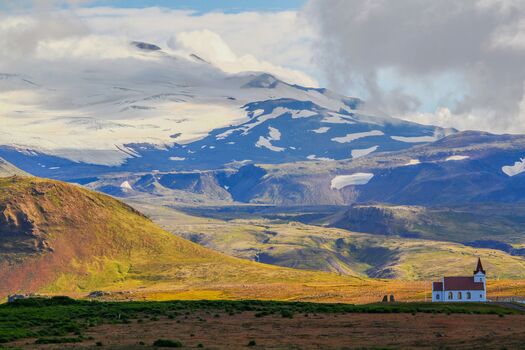
If tour operators don’t offer hotel pickups, restaurants aren’t walkable, and public transport runs infrequently, organising a full holiday can be difficult. A location that makes a fantastic stop on a driving route is not necessarily the best base for a car-free holiday.
Reykjavík or Somewhere Else? Use This Simple Rule
To choose where to stay in Iceland, match your travel goals to the base that best supports your transport needs.
Stay in Reykjavík if you are visiting for the first time and want to see several famous landscapes without changing hotels. The capital is especially practical if you plan to rely on organised day tours. It’s also ideal for travellers who value having restaurants, shops, museums, and other city attractions within walking distance.
On the other hand, consider other bases when your itinerary has a more specific focus. Akureyri works well if North Iceland is a priority, particularly when combined with a Reykjavík leg for southern sightseeing. Vík is better suited to an overnight stop on a South Coast itinerary. Meanwhile, Keflavík is most useful at the beginning or end of a trip when airport convenience matters.
FAQs
Where is the best place to stay in Iceland without a car?
For most first-time visitors, Reykjavík is the most practical base. The capital offers straightforward airport transfers, walkable amenities, and guided day tours departing from designated pickup points around the city.
Where should first-time visitors stay in Iceland?
Central Reykjavík is usually the most convenient choice for first-time visitors. It offers easy access to restaurants, museums, shops, and cultural sights, while also making it simple to join organised excursions.
Can you see the Golden Circle without renting a car?
Yes, the Golden Circle is one of the easiest major sightseeing routes to visit without driving. Day tours from Reykjavík typically include Þingvellir National Park, the Geysir geothermal area, and Gullfoss waterfall in a single day.
Can you travel around Iceland using public transport?
Yes, public buses connect Reykjavík with towns in different parts of Iceland, although they are designed for transport rather than sightseeing. For nature-focused itineraries, organised day tours or guided multi-day trips are often more practical.
Is Reykjavík a good base for exploring Iceland?
Yes. Reykjavík is a particularly useful base for car-free travellers because many full-day excursions depart from the capital. Depending on the tour, you can visit waterfalls, glaciers, beaches, geothermal areas, and other attractions before returning to the city.


Áhugaverðar ferðir


Related Blog Articles
Inspired? Read more fun and informative articles on this subject.


Snaefellsnes Peninsula: Things to See and Do
The Snaefellsnes Peninsula, often described as Iceland in miniature, offers a stunning array of landscapes, including volcanoes, glaciers, black sand beaches, and charming villages. This guide explores day and overnight tours, the best self-drive routes, and recommendations for places to stay and eat.
Where to Stay in Iceland Without Renting a Car
15. september 2026
Where to Stay in Iceland Without Renting a Car
15. september 2026
The dream of exploring Iceland doesn’t have to mean an endless road trip around the island. Travellers who aren’t planning on renting a car can still see many of the country’s highlights; it just takes a different approach.
The first and most important question is where to stay in Iceland so you can easily reach the sights you came to see. After all, many famous landmarks are scattered across the island, and transportation is much easier from some towns than others. A secluded hotel may sound appealing, but it doesn’t necessarily make for a practical base if tours and public transport are limited.
For many travellers, choosing the right base is key to a relaxed, well-organised holiday.
Before Choosing a Hotel, Work Out How You Will Get Around
Getting around Iceland without a car is definitely possible, but preparation is essential. An important piece of trip advice for first-timers is to understand Iceland’s different transport options and how each one fits into your itinerary.
- Airport Transfers: Scheduled airport buses connect Keflavík International Airport with Reykjavík, making arrivals and departures relatively simple.
- Local Buses: Reykjavík without a car is easy to navigate, thanks to a public bus network covering the city centre and surrounding neighbourhoods.
- Regional Scheduled Buses: Public buses connect towns in different parts of the country, although routes and frequencies usually vary by region and season.
- Domestic Flights: From Reykjavík Airport, there are flights connecting the capital to regional centres like Akureyri in the north. These are useful for visitors who are planning to spend a good chunk of their holiday in another part of Iceland.
- Organised Day Tours: Guided excursions designed for sightseeing depart regularly to major natural attractions, combining transportation with planned itineraries and local commentary.
Remember that not all the buses you’ll encounter serve the same purpose. There’s a difference between Iceland public transport and transport designed for tourism. Regional buses can get you from town to town, but these routes aren’t built around waterfalls, scenic viewpoints, or other visitor stops. If your main goal is to explore, organised day tours will take you straight to the sights.
A Good Car-Free Base Needs More Than a Nice View
When choosing where to base yourself in Iceland, practicality matters just as much as scenery. A picturesque location is certainly appealing, but it should not be the only requirement. If you are not driving, the best area to stay in Iceland should offer everyday conveniences and reliable transport links. Look for a location that provides:
- Regular tour departures.
- Straightforward airport connections.
- Walkable access to restaurants, cafés, and, if possible, a central shopping street.
- Nearby grocery stores, pharmacies, and other everyday services.
- Easy access to local bus stops.
- Access to a range of sightseeing options.
- Museums, cultural attractions, or indoor activities for poor-weather days.
- Places to eat after returning from a long day tour.
Even before booking a hotel in Iceland, spend some time going through your itinerary. Consider how you will reach the property from the airport, where you can eat nearby, and how you will travel to different regions during your stay. Do excursion providers offer pickups close to the accommodation? Will you need an additional bus or taxi to reach the departure point?
A remote hotel in Iceland can be wonderful, but without a car it often requires extra planning. Knowing how your accommodation connects with the rest of your itinerary can make the trip considerably easier.
Why Reykjavík Works So Well as a Car-Free Base
The capital is usually one of the first places travellers consider when deciding where to stay in Iceland. That makes sense for car-free visitors, as the city combines strong transport connections with a wide range of guided excursions. By staying in Reykjavík, it’s possible to explore several iconic regions without changing hotels between each trip.
The most popular Iceland tours from Reykjavík include sightseeing around the Golden Circle and exploring South Coast’s waterfalls, glaciers, and black sand beaches. From here, travellers can soak in geothermal spas, while winter evenings can be spent on Northern Lights tours. On quieter days, the capital itself offers incredible diversity, from coastal walks and museums to shopping streets, cafés, and restaurants.
This mix of tour departures, airport connections, and everyday services is what makes Reykjavík especially convenient. A single hotel base lets travellers avoid constantly hauling luggage between towns and checking in and out of different accommodation. Plus, since the city is so well-connected, even three days in Reykjavík can pack a whole lot of sightseeing.
Where to Stay in Reykjavík When Tours Are Your Main Transport
For car-free travellers deciding where to stay in Iceland, choosing Reykjavík is only half the plan. Where you stay within the capital can also make a big difference. When looking for the best area to stay in Reykjavík, focus on two things: access to tour pickup points and everyday practicalities. A well-located hotel should make it easy to reach departure points. At the same time, restaurants, shops, local buses, and even some city attractions should be close by.
Around BSÍ: Best for the Simplest Tour Departures
The BSÍ Bus Terminal sits outside Reykjavík city centre and is a key transport hub for airport coaches and many organised tour departures. Staying nearby can be particularly convenient for travellers who want to minimise commuting to the bus stop on early morning tours. It also makes airport transfers easier, especially at the beginning and end of your trip.
Reykjavík City Centre: Best Balance of Sightseeing and Tour Access
The city centre, around Laugavegur shopping street and the harbour, is one of the most convenient areas to stay in Reykjavík. Many restaurants, cafés, shops, and local attractions are right at your fingertips, making it simple to explore even on foot.
Since parts of central Reykjavík have narrow streets and traffic restrictions, large tour coaches cannot stop directly outside every downtown hotel. Instead, designated tour bus stops are positioned around the city centre, often within a short walk of many hotels and guesthouses.
Just Outside the Centre: Often Better Value
Neighbourhoods slightly outside of downtown can offer quieter surroundings and lower rates while remaining connected via public buses or nearby tour stops. When booking in these areas, make sure your hotel is within walking distance of one of the designated pickup locations in Reykjavík. This is especially important for early morning departures, when adding a long walk or extra bus connection can be less convenient.
How Much of Iceland Can You Actually See From Reykjavík?
A common concern for car-free travellers is that staying in the capital will limit how much of Iceland they can see. In reality, a vast range of Iceland tours without a car come from the capital every day. Seamless accessibility is why Reykjavík is usually considered as the best place to stay in Iceland for first-time visitors.
The Golden Circle Is Made for a Reykjavík Day Trip
Lying within easy reach of the capital, the Golden Circle is the country’s best-known sightseeing route. Golden Circle tours typically cover three major sites: Þingvellir National Park, the Geysir geothermal area, and the two-tiered Gullfoss waterfall.
For travellers deciding where to stay in Iceland without a car, Reykjavík makes the Golden Circle especially ideal. The relatively compact route is one of the simplest ways to see several major Icelandic wonders in a single day.
The South Coast Is Long, But Still Accessible
South Coast tours are often a longer day trip, but the variety of landscapes along the route makes the journey especially rewarding. Excursions from the capital take travellers past iconic waterfalls like Seljalandsfoss and Skógafoss, black-sand beaches, and views of towering glaciers.
If the floating icebergs of Jökulsárlón Glacier Lagoon are on your bucket list, a day trip from Reykjavík is possible. However, you should expect a very long day of travel with limited time to linger. Alternatively, a two-day guided trip gives you more time to explore the southeast, including Jökulsárlón and nearby Diamond Beach.
You Don't Have to Choose Between Reykjavík and a Rental Car
Some travellers assume they must choose between staying in Reykjavík every night and committing to a full self-drive trip. However, there is a useful middle ground: combining a Reykjavík base with one or more multi-day guided excursions.
In this hybrid approach, you can spend most of your holiday based in the capital. Then, simply join a guided multi-day tour for destinations farther afield, such as Snaefellsnes Peninsula or the glacial lagoons. Professional guides handle the driving, route planning, and day-to-day logistics, while Reykjavík remains your main base before and after the trip. It is the best of both worlds for travellers planning a longer Iceland itinerary without a car.
When Staying Outside Reykjavík Actually Makes Sense
When choosing where to stay in Iceland, Reykjavík usually offers the greatest flexibility for car-free travellers. However, there are situations where basing yourself elsewhere can work well, particularly if one region is the main focus of your trip. The key is to plan around the trade-offs, including fewer transport connections, fewer organised tours, and more limited services.
Akureyri: A Strong Second Base for North Iceland
Located in the north, Akureyri is Iceland’s second-largest urban area and a practical base for travellers focusing on North Iceland. Its compact centre is easy to explore, with restaurants, cultural attractions, and local tour operators all within relatively easy reach. From here, travellers can join excursions to highlights such as Lake Mývatn, Goðafoss waterfall, and whale-watching trips in Húsavík.
Domestic flights operate year-round from Reykjavík Airport, or you can take a six-hour public bus journey along the Ring Road. The trade-off is that Akureyri doesn’t offer the same access to southern routes like the Golden Circle and South Coast. It works best as a second base combined with a Reykjavík-based leg.
Vík: Useful When the South Coast Is the Main Event
Vík is a small coastal village on Iceland’s South Coast and a useful overnight stop for travellers exploring the region. It’s close to Reynisfjara, while also serving as a natural stopping point on longer journeys towards the glacier lagoons. Many guided multi-day itineraries actually include an overnight stay in Vík.
However, its small size means dining choices, public transport connections, and independent sightseeing options are more limited than in Reykjavík. It generally works best as an overnight stop rather than a standalone base for several days.
Keflavík: Convenient for the Airport, Not for Seeing Iceland
Keflavík sits on the Reykjanes Peninsula close to Keflavík International Airport, making it most useful for late arrivals, early departures, or short stopovers. From here, it’s easy to explore parts of the Reykjanes Peninsula or arrange a visit to the Blue Lagoon.
The main drawback is that Keflavík is not a particularly practical base for exploring the rest of Iceland. Tour choices and onward connections are more limited than in the capital, so it’s better as a first or final overnight stop.
Beautiful Places That Are Harder to Use as a Car-Free Base
When deciding where to stay in Iceland, the country’s most scenic regions may look appealing. However, some are better suited to self-drive road trips than independent car-free stays. These include the Snæfellsnes Peninsula, more remote stretches of the South Coast, the Eastfjords, and the Westfjords. They make excellent stops on a road trip, but staying there for several days without a car is often challenging.
If tour operators don’t offer hotel pickups, restaurants aren’t walkable, and public transport runs infrequently, organising a full holiday can be difficult. A location that makes a fantastic stop on a driving route is not necessarily the best base for a car-free holiday.
Reykjavík or Somewhere Else? Use This Simple Rule
To choose where to stay in Iceland, match your travel goals to the base that best supports your transport needs.
Stay in Reykjavík if you are visiting for the first time and want to see several famous landscapes without changing hotels. The capital is especially practical if you plan to rely on organised day tours. It’s also ideal for travellers who value having restaurants, shops, museums, and other city attractions within walking distance.
On the other hand, consider other bases when your itinerary has a more specific focus. Akureyri works well if North Iceland is a priority, particularly when combined with a Reykjavík leg for southern sightseeing. Vík is better suited to an overnight stop on a South Coast itinerary. Meanwhile, Keflavík is most useful at the beginning or end of a trip when airport convenience matters.
FAQs
Where is the best place to stay in Iceland without a car?
For most first-time visitors, Reykjavík is the most practical base. The capital offers straightforward airport transfers, walkable amenities, and guided day tours departing from designated pickup points around the city.
Where should first-time visitors stay in Iceland?
Central Reykjavík is usually the most convenient choice for first-time visitors. It offers easy access to restaurants, museums, shops, and cultural sights, while also making it simple to join organised excursions.
Can you see the Golden Circle without renting a car?
Yes, the Golden Circle is one of the easiest major sightseeing routes to visit without driving. Day tours from Reykjavík typically include Þingvellir National Park, the Geysir geothermal area, and Gullfoss waterfall in a single day.
Can you travel around Iceland using public transport?
Yes, public buses connect Reykjavík with towns in different parts of Iceland, although they are designed for transport rather than sightseeing. For nature-focused itineraries, organised day tours or guided multi-day trips are often more practical.
Is Reykjavík a good base for exploring Iceland?
Yes. Reykjavík is a particularly useful base for car-free travellers because many full-day excursions depart from the capital. Depending on the tour, you can visit waterfalls, glaciers, beaches, geothermal areas, and other attractions before returning to the city.
Áhugaverðar ferðir
Related Blog Articles
Inspired? Read more fun and informative articles on this subject.
Snaefellsnes Peninsula: Things to See and Do
The Snaefellsnes Peninsula, often described as Iceland in miniature, offers a stunning array of landscapes, including volcanoes, glaciers, black sand beaches, and charming villages. This guide explores day and overnight tours, the best self-drive routes, and recommendations for places to stay and eat.