

Why the Golden Circle and South Coast Are Iceland's Most Visited Regions
29. júlí 2026
Why the Golden Circle and South Coast Are Iceland's Most Visited Regions
29. júlí 2026
Any Icelandic bucket list likely starts with two iconic routes: the Golden Circle and the South Coast. Many of the popular places in Iceland lie along these well-established sightseeing routes. They bring together a remarkable concentration of national parks, geothermal landscapes, waterfalls, glaciers, and volcanic beaches. Both routes are easily accessible from the capital city, making them ideal for day trips.
Travellers researching what to see on the Golden Circle and South Coast will discover two very different worlds. The compact Golden Circle route loops inland through historical valleys and geysers. Meanwhile, the longer South Coast follows the Atlantic coastline past glaciers, black-sand beaches and coastal villages.
Rather than choosing between them, experiencing both provides a broader introduction to the natural and cultural highlights of South Iceland. Here are ten major attractions to look forward to along the two routes.
1. Þingvellir National Park
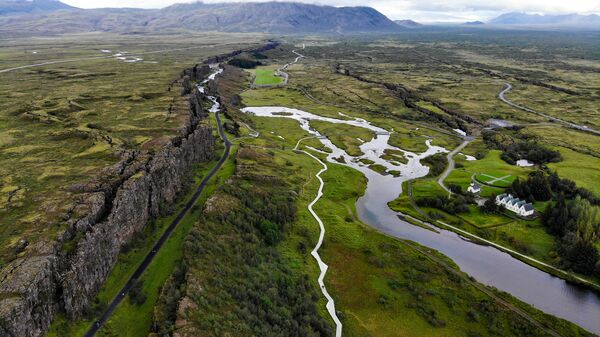
Located around 50 kilometres (31 miles) from Reykjavík, Þingvellir National Park is an important historical and geological site. In fact, for many travellers who want to know what to see in the Golden Circle Iceland, this is the starting point.
Þingvellir is a UNESCO World Heritage Site and the original meeting place of the Alþingi, Iceland's national assembly, established in AD 930 and considered one of the world's oldest parliamentary institutions. Representatives gathered at Þingvellir to make laws and settle disputes for centuries, giving the valley a central place in Iceland’s cultural history.
The park also provides a clear view of the geological forces shaping Iceland. Þingvellir lies within an active rift zone associated with the North American and Eurasian tectonic plates. Rather than standing with one foot on each plate, visitors can explore a broad valley where the land is being pulled apart. Walking routes pass through fissures such as Almannagjá, a dramatic ravine marking the western edge of the rift valley.
Another notable feature is the exceptionally clear water of the Silfra fissure. Groundwater filters slowly through porous lava before emerging at Þingvellir, creating exceptional underwater visibility. More adventurous visitors can explore it by snorkelling in Silfra in Þingvellir. Just keep in mind that this is a separate guided activity rather than part of a standard Golden Circle sightseeing stop.
By combining national history, visible geological processes and accessible walking trails, Þingvellir offers several reasons to visit within a single stop.
2. Geysir Geothermal Area
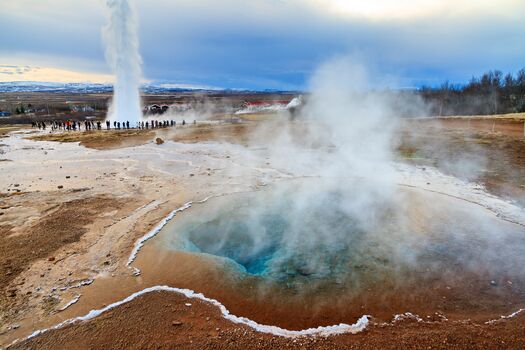
Situated in the Haukadalur geothermal valley, the Geysir Geothermal Area provides a close look at the geothermal activity shaping Iceland. The site is home to the Great Geysir, the historic hot spring that gave the English language the word “geyser.” Although Geysir itself is now largely inactive, the surrounding geothermal field remains active, with numerous hot springs, pools, and steaming vents.
Today, the main attraction is Strokkur, an active geyser that erupts every few minutes. Its bursts commonly send hot water around 15–20 metres (49–66 feet) into the air, although stronger eruptions can reach greater heights. Visitors can also observe bubbling pools, steaming hot springs, and mineral deposits formed by geothermal activity. During summer, a Golden Circle evening tour offers a later visit while daylight still lingers, once the main daytime crowds have begun to thin out.
Marked paths and viewing areas allow visitors to explore while keeping a safe distance from the fragile ground and near-boiling water. Across the road, the visitor centre offers food, toilets and other useful facilities. For travellers wondering what to expect on a Golden Circle day tour, watching Strokkur erupt is one of the major highlights.
3. Gullfoss Waterfall
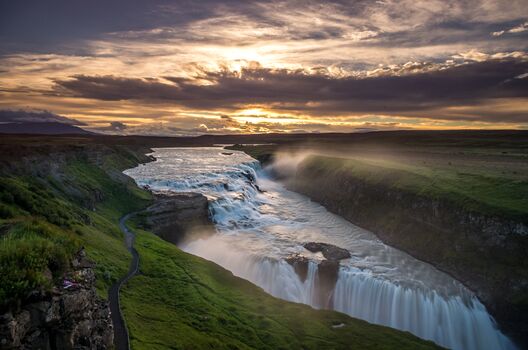
Fed by the glacial Hvítá river, Gullfoss Waterfall is one of Iceland’s best-known and most powerful cascades. The river descends in two stages before entering a narrow, rugged canyon. From some viewpoints, the lower riverbed is hidden, creating the impression that the water is disappearing into the earth.
Constant spray, changing light, and seasonal conditions give Gullfoss a different appearance throughout the year. Summer generally brings strong flows and long daylight, while winter can cover sections of the canyon in ice and snow. Several viewing areas provide different perspectives, including an upper viewpoint across the gorge and a lower path closer to the waterfall. The lower path may be slippery or closed when conditions are icy.
As Gullfoss is easily combined with Geysir and Þingvellir, a Golden Circle direct tour brings the route’s three principal landmarks together. For a wilder twist on the experience, travellers can also combine the Golden Circle and horseback riding.
4. Kerið Crater
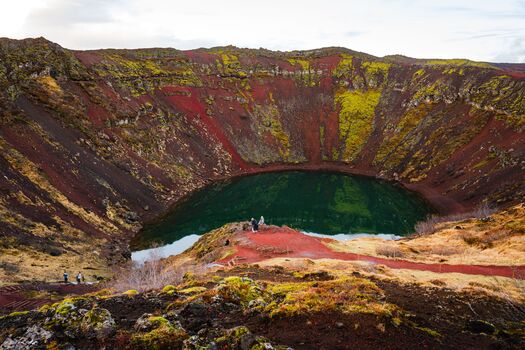
Often included on expanded Golden Circle tours, Kerið is a striking volcanic crater lake that offers a different geological perspective. Formed thousands of years ago, the crater has steep slopes of red and dark volcanic rock. These colours contrast vividly with the blue-green water at its base.
On a Golden Circle tour with Kerið Crater, it serves as a relatively compact walking stop. A path runs around the crater rim, while steps lead down towards the water’s edge. Visitors should take care on the slopes, particularly when paths are wet or icy.
As Kerið charges an admission fee and isn’t included on every standard itinerary, travellers should check their planned route in advance. However, it demonstrates why it can be rewarding to look beyond the Golden Circle trio.
Connecting the Routes
When you visit the Golden Circle, you will experience Iceland through continental rifting, geothermal activity and inland waterways. A South Coast tour adds glaciers, sea cliffs, black-sand beaches and broad views across the North Atlantic. This variety is one of the main reasons some travellers explore both regions during the same trip. Together, the two routes provide a well-rounded introduction to the contrasting landscapes of South Iceland.
5. Seljalandsfoss Waterfall
 When considering what to see on the South Coast of Iceland, Seljalandsfoss is often one of the first major landmarks on the route from Reykjavík. Dropping approximately 60 metres (197 feet), the waterfall is known for the recessed cliff behind its cascade.
Its most famous feature is a walking path that leads behind the curtain of water. From there, visitors can look out across the surrounding landscape through the spray. Waterproof clothing and sturdy footwear are recommended, as the path is often wet and slippery.
In winter, the path behind Seljalandsfoss may close because of ice and hazardous conditions. Fortunately, this stunning waterfall can still be viewed from the front. Its location just off Route 1 makes Seljalandsfoss one of the most accessible South Coast sights.
6. Skógafoss Waterfall
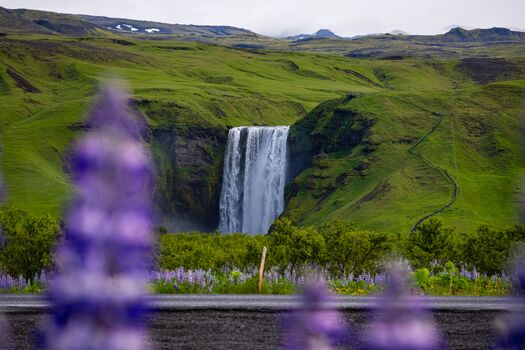
Further east along the South Coast, Skógafoss is one of Iceland’s best-known waterfalls. Around 60 metres (197 feet) high and 25 metres (82 feet) wide, it drops in a broad curtain of water. The powerful cascade creates a constant cloud of mist at its base.
The flat terrain provides close views from the riverbank, although visitors should expect to get wet if they approach the falls. For a different perspective, visitors can climb a steep staircase of more than 400 steps. This leads to an upper viewing platform overlooking the crest of the waterfall and the Skógá river. On sunny days, the dense spray can produce rainbows in the air.
7. Sólheimajökull Glacier
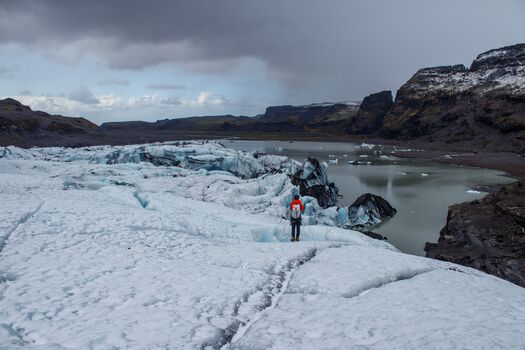
Sólheimajökull is an outlet glacier extending from the much larger Mýrdalsjökull ice cap, and it's one of the most accessible glacier environments from Reykjavík, offering a close view of Iceland's shifting glacial landscape.
A walk from the parking area leads towards rugged ice formations, meltwater, and dark layers of volcanic ash and sediment. A lagoon has formed in front of the retreating glacier, where pieces of ice may be seen floating near the terminus. It is a changing landscape that provides an example of glacier retreat and the effects of a warming climate.
Visitors should never walk onto Sólheimajökull without a qualified glacier guide and suitable safety equipment, including crampons. Those seeking an immersive experience can join a South Coast and kayak tour combining the main waterfalls with glacier lagoon kayaking. Certified guides provide instruction and the necessary equipment for the activity.
8. Reynisfjara Black Sand Beach
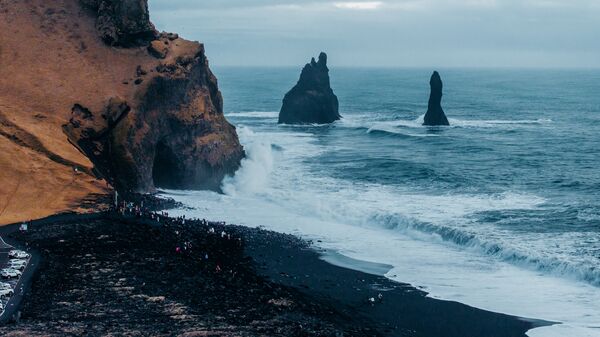
Reynisfjara is one of Iceland’s best-known black-sand beaches and a major attraction on the South Coast of Iceland. Its shoreline is formed from black volcanic sand and smooth pebbles. Offshore, the Reynisdrangar sea stacks rise from the North Atlantic, while geometric basalt columns line the cliffs beside the beach.
Its distinctive scenery explains its popularity, but Reynisfjara also requires careful attention to safety. The beach faces the open Atlantic, where powerful sneaker waves can travel unexpectedly far inland. These waves can knock visitors over and pull them into the sea, even when the water appears calm.
Visitors must follow the warning lights and safety signs at the entrance, remain well back from the waterline and respect any closures. Never turn your back on the sea. It is also important to avoid standing directly beneath the cliffs, where falling rocks can present an additional hazard.
9. Dyrhólaey Peninsula
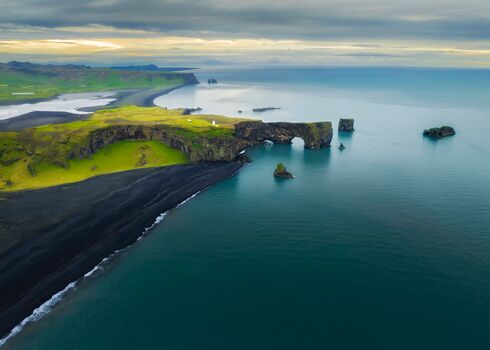
Rising above the sea, Dyrhólaey is a prominent coastal headland with views along Iceland’s southern shoreline. Its best-known feature is a large natural arch of dark volcanic rock extending into the North Atlantic. Dyrhólaey is also a protected nature reserve, valued for both its geological features and birdlife.
From the upper viewpoints, visitors can look west across broad black-sand plains and north towards the Mýrdalsjökull ice cap. The cliffs provide nesting habitat for several seabird species, including Atlantic puffins in summer, although sightings are never guaranteed. Keep in mind that seasonal access restrictions may be introduced to protect nesting birds.
Road and weather conditions can also affect access to the upper lighthouse area. Visitors should follow local signs, remain on marked paths and keep away from cliff edges. Arctic grasses and mosses cover parts of the exposed headland, adding colour to the otherwise dark coastal landscape.
10. Vík í Mýrdal
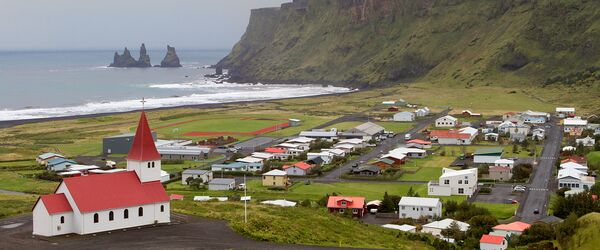
Vík í Mýrdal is the southernmost village on Iceland’s mainland. Nestled beneath the slopes of Reynisfjall, this small settlement is a useful service stop for travellers following the Ring Road. The village is home to restaurants, fuel stations, shops, accommodation, and other visitor facilities.
One of its most recognisable landmarks is Víkurkirkja, a red-roofed church positioned on a hill above the town. The surrounding area offers views towards the coast and the Reynisdrangar sea stacks. Vík is also a common turnaround point for standard South Coast day trips from Reykjavík.
For travellers continuing farther east, Vík provides a convenient stopover on the way to Skaftafell, Vatnajökull National Park, and the glacier lagoons. A Jökulsárlón Glacial Lagoon and boat tour offers an incredible opportunity to experience a vast lagoon filled with massive icebergs.
How to Visit These Attractions
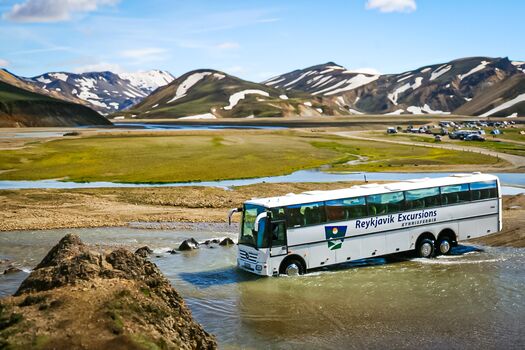
Planning a trip to these regions generally comes down to choosing between an independent self-drive itinerary and a guided excursion. For travellers organising what to see in the Golden Circle Iceland and what to see on the South Coast Iceland, both methods have distinct advantages.
Self-Drive
Renting a vehicle gives you greater control over your daily schedule. Choose your own departure time, spend longer at viewpoints, and add smaller stops such as Kerið to your route.
However, self-driving also means taking responsibility for navigation, parking, and regularly checking local roads and weather conditions, which can change quickly in Iceland. Winter driving may involve icy roads, gale-force winds, limited daylight, and sudden snowfall. Travellers should plan carefully, allow extra time, and feel confident driving in changing conditions.
Guided Tours
Guided tours simplify transport, route planning and travel in changing Icelandic conditions. Professional drivers handle the roads, while experienced guides provide useful historical, geological and cultural context throughout the journey. This option is practical for short-stay travellers, winter visitors, and those staying in central Reykjavík who prefer a well-organised experience. Guided excursions are also one of the simplest ways to explore Iceland without a car.
Combination Tours
For visitors who want to maximise their time, combination tours blend standard sightseeing routes with outdoor adventures. For instance, a Golden Circle and ATV tour combines the route’s natural and historic sites with an off-road ATV ride. Another popular option is the Golden Circle and horseback riding tours, offering a unique perspective of Iceland’s rugged vistas.
On the South Coast, combination tours can add activities such as glacier hiking or kayaking to a day of sightseeing. These organised itineraries make it possible to visit the main attractions and enjoy extra excursions without separate arrangements.
Experiencing the Best of South Iceland
The enduring popularity of these two routes comes from their natural variety, cultural importance, and accessibility. Travellers deciding what to see in Golden Circle Iceland can experience historic Þingvellir, active Strokkur, and powerful Gullfoss. Meanwhile, the list of what to see on the South Coast Iceland features waterfalls, glaciers, black-sand beaches, and coastal villages. Rather than choosing one route over the other, experiencing both gives visitors a broader understanding of South Iceland.
FAQs
Can you visit the Golden Circle and South Coast in one day?
Yes, it is possible in the summer with its neverending daylight, but it makes for a very full day. Most travellers enjoy a more relaxed experience by visiting the Golden Circle as a day trip and exploring the South Coast on a separate day or over two days.
Which is better to visit first, the Golden Circle or the South Coast?
Most visitors start with the Golden Circle because it is closer to Reykjavík and features three of Iceland's most famous natural attractions. The South Coast is often explored afterward, especially if continuing east toward Vík, Skaftafell, or Jökulsárlón Glacier Lagoon.
How much time should you spend on the Golden Circle and South Coast?
The Golden Circle can typically be explored in 6–8 hours, while the South Coast often takes 10–12 hours for a day trip from Reykjavík. If your schedule allows, spending two or more days across both regions gives you more time to enjoy the attractions without rushing.
Can you drive the Golden Circle and South Coast yourself?
Yes. Both routes are accessible by car throughout much of the year. However, visitors should always check Iceland's road and weather conditions before setting out, particularly during winter when snow, ice, and strong winds can affect driving.
What should you pack for a Golden Circle and South Coast trip?
Dress in layers and bring waterproof clothing, sturdy walking shoes, and a warm outer layer. Even in summer, Iceland's weather can change quickly, and many waterfalls create heavy spray that can leave visitors wet.
Are the Golden Circle and South Coast suitable for families?
Yes. Most attractions along both routes are family-friendly and easy to access. Short walking paths, visitor facilities, and a wide variety of natural sights make these regions popular with travellers of all ages.


Áhugaverðar ferðir


Blogg
Fáðu innblástur! Upplýsingar og góð ráð, áhugaverðir áfangastaðir, skemmtilegar staðreyndar og margt fleira. Bloggið okkar er á ensku en það er stórskemmtilegt engu að síður!


The Silver Circle of West Iceland - Your Guide
You’ve heard of the Golden Circle, but here’s why you should head to Iceland’s western region to explore the msytical Silver Circle tour route.
Lesa bloggWhy the Golden Circle and South Coast Are Iceland's Most Visited Regions
29. júlí 2026
Why the Golden Circle and South Coast Are Iceland's Most Visited Regions
29. júlí 2026
Any Icelandic bucket list likely starts with two iconic routes: the Golden Circle and the South Coast. Many of the popular places in Iceland lie along these well-established sightseeing routes. They bring together a remarkable concentration of national parks, geothermal landscapes, waterfalls, glaciers, and volcanic beaches. Both routes are easily accessible from the capital city, making them ideal for day trips.
Travellers researching what to see on the Golden Circle and South Coast will discover two very different worlds. The compact Golden Circle route loops inland through historical valleys and geysers. Meanwhile, the longer South Coast follows the Atlantic coastline past glaciers, black-sand beaches and coastal villages.
Rather than choosing between them, experiencing both provides a broader introduction to the natural and cultural highlights of South Iceland. Here are ten major attractions to look forward to along the two routes.
1. Þingvellir National Park
Located around 50 kilometres (31 miles) from Reykjavík, Þingvellir National Park is an important historical and geological site. In fact, for many travellers who want to know what to see in the Golden Circle Iceland, this is the starting point.
Þingvellir is a UNESCO World Heritage Site and the original meeting place of the Alþingi, Iceland's national assembly, established in AD 930 and considered one of the world's oldest parliamentary institutions. Representatives gathered at Þingvellir to make laws and settle disputes for centuries, giving the valley a central place in Iceland’s cultural history.
The park also provides a clear view of the geological forces shaping Iceland. Þingvellir lies within an active rift zone associated with the North American and Eurasian tectonic plates. Rather than standing with one foot on each plate, visitors can explore a broad valley where the land is being pulled apart. Walking routes pass through fissures such as Almannagjá, a dramatic ravine marking the western edge of the rift valley.
Another notable feature is the exceptionally clear water of the Silfra fissure. Groundwater filters slowly through porous lava before emerging at Þingvellir, creating exceptional underwater visibility. More adventurous visitors can explore it by snorkelling in Silfra in Þingvellir. Just keep in mind that this is a separate guided activity rather than part of a standard Golden Circle sightseeing stop.
By combining national history, visible geological processes and accessible walking trails, Þingvellir offers several reasons to visit within a single stop.
2. Geysir Geothermal Area
Situated in the Haukadalur geothermal valley, the Geysir Geothermal Area provides a close look at the geothermal activity shaping Iceland. The site is home to the Great Geysir, the historic hot spring that gave the English language the word “geyser.” Although Geysir itself is now largely inactive, the surrounding geothermal field remains active, with numerous hot springs, pools, and steaming vents.
Today, the main attraction is Strokkur, an active geyser that erupts every few minutes. Its bursts commonly send hot water around 15–20 metres (49–66 feet) into the air, although stronger eruptions can reach greater heights. Visitors can also observe bubbling pools, steaming hot springs, and mineral deposits formed by geothermal activity. During summer, a Golden Circle evening tour offers a later visit while daylight still lingers, once the main daytime crowds have begun to thin out.
Marked paths and viewing areas allow visitors to explore while keeping a safe distance from the fragile ground and near-boiling water. Across the road, the visitor centre offers food, toilets and other useful facilities. For travellers wondering what to expect on a Golden Circle day tour, watching Strokkur erupt is one of the major highlights.
3. Gullfoss Waterfall
Fed by the glacial Hvítá river, Gullfoss Waterfall is one of Iceland’s best-known and most powerful cascades. The river descends in two stages before entering a narrow, rugged canyon. From some viewpoints, the lower riverbed is hidden, creating the impression that the water is disappearing into the earth.
Constant spray, changing light, and seasonal conditions give Gullfoss a different appearance throughout the year. Summer generally brings strong flows and long daylight, while winter can cover sections of the canyon in ice and snow. Several viewing areas provide different perspectives, including an upper viewpoint across the gorge and a lower path closer to the waterfall. The lower path may be slippery or closed when conditions are icy.
As Gullfoss is easily combined with Geysir and Þingvellir, a Golden Circle direct tour brings the route’s three principal landmarks together. For a wilder twist on the experience, travellers can also combine the Golden Circle and horseback riding.
4. Kerið Crater
Often included on expanded Golden Circle tours, Kerið is a striking volcanic crater lake that offers a different geological perspective. Formed thousands of years ago, the crater has steep slopes of red and dark volcanic rock. These colours contrast vividly with the blue-green water at its base.
On a Golden Circle tour with Kerið Crater, it serves as a relatively compact walking stop. A path runs around the crater rim, while steps lead down towards the water’s edge. Visitors should take care on the slopes, particularly when paths are wet or icy.
As Kerið charges an admission fee and isn’t included on every standard itinerary, travellers should check their planned route in advance. However, it demonstrates why it can be rewarding to look beyond the Golden Circle trio.
Connecting the Routes
When you visit the Golden Circle, you will experience Iceland through continental rifting, geothermal activity and inland waterways. A South Coast tour adds glaciers, sea cliffs, black-sand beaches and broad views across the North Atlantic. This variety is one of the main reasons some travellers explore both regions during the same trip. Together, the two routes provide a well-rounded introduction to the contrasting landscapes of South Iceland.
5. Seljalandsfoss Waterfall
When considering what to see on the South Coast of Iceland, Seljalandsfoss is often one of the first major landmarks on the route from Reykjavík. Dropping approximately 60 metres (197 feet), the waterfall is known for the recessed cliff behind its cascade.
Its most famous feature is a walking path that leads behind the curtain of water. From there, visitors can look out across the surrounding landscape through the spray. Waterproof clothing and sturdy footwear are recommended, as the path is often wet and slippery.
In winter, the path behind Seljalandsfoss may close because of ice and hazardous conditions. Fortunately, this stunning waterfall can still be viewed from the front. Its location just off Route 1 makes Seljalandsfoss one of the most accessible South Coast sights.
6. Skógafoss Waterfall
Further east along the South Coast, Skógafoss is one of Iceland’s best-known waterfalls. Around 60 metres (197 feet) high and 25 metres (82 feet) wide, it drops in a broad curtain of water. The powerful cascade creates a constant cloud of mist at its base.
The flat terrain provides close views from the riverbank, although visitors should expect to get wet if they approach the falls. For a different perspective, visitors can climb a steep staircase of more than 400 steps. This leads to an upper viewing platform overlooking the crest of the waterfall and the Skógá river. On sunny days, the dense spray can produce rainbows in the air.
7. Sólheimajökull Glacier
Sólheimajökull is an outlet glacier extending from the much larger Mýrdalsjökull ice cap, and it's one of the most accessible glacier environments from Reykjavík, offering a close view of Iceland's shifting glacial landscape.
A walk from the parking area leads towards rugged ice formations, meltwater, and dark layers of volcanic ash and sediment. A lagoon has formed in front of the retreating glacier, where pieces of ice may be seen floating near the terminus. It is a changing landscape that provides an example of glacier retreat and the effects of a warming climate.
Visitors should never walk onto Sólheimajökull without a qualified glacier guide and suitable safety equipment, including crampons. Those seeking an immersive experience can join a South Coast and kayak tour combining the main waterfalls with glacier lagoon kayaking. Certified guides provide instruction and the necessary equipment for the activity.
8. Reynisfjara Black Sand Beach
Reynisfjara is one of Iceland’s best-known black-sand beaches and a major attraction on the South Coast of Iceland. Its shoreline is formed from black volcanic sand and smooth pebbles. Offshore, the Reynisdrangar sea stacks rise from the North Atlantic, while geometric basalt columns line the cliffs beside the beach.
Its distinctive scenery explains its popularity, but Reynisfjara also requires careful attention to safety. The beach faces the open Atlantic, where powerful sneaker waves can travel unexpectedly far inland. These waves can knock visitors over and pull them into the sea, even when the water appears calm.
Visitors must follow the warning lights and safety signs at the entrance, remain well back from the waterline and respect any closures. Never turn your back on the sea. It is also important to avoid standing directly beneath the cliffs, where falling rocks can present an additional hazard.
9. Dyrhólaey Peninsula
Rising above the sea, Dyrhólaey is a prominent coastal headland with views along Iceland’s southern shoreline. Its best-known feature is a large natural arch of dark volcanic rock extending into the North Atlantic. Dyrhólaey is also a protected nature reserve, valued for both its geological features and birdlife.
From the upper viewpoints, visitors can look west across broad black-sand plains and north towards the Mýrdalsjökull ice cap. The cliffs provide nesting habitat for several seabird species, including Atlantic puffins in summer, although sightings are never guaranteed. Keep in mind that seasonal access restrictions may be introduced to protect nesting birds.
Road and weather conditions can also affect access to the upper lighthouse area. Visitors should follow local signs, remain on marked paths and keep away from cliff edges. Arctic grasses and mosses cover parts of the exposed headland, adding colour to the otherwise dark coastal landscape.
10. Vík í Mýrdal
Vík í Mýrdal is the southernmost village on Iceland’s mainland. Nestled beneath the slopes of Reynisfjall, this small settlement is a useful service stop for travellers following the Ring Road. The village is home to restaurants, fuel stations, shops, accommodation, and other visitor facilities.
One of its most recognisable landmarks is Víkurkirkja, a red-roofed church positioned on a hill above the town. The surrounding area offers views towards the coast and the Reynisdrangar sea stacks. Vík is also a common turnaround point for standard South Coast day trips from Reykjavík.
For travellers continuing farther east, Vík provides a convenient stopover on the way to Skaftafell, Vatnajökull National Park, and the glacier lagoons. A Jökulsárlón Glacial Lagoon and boat tour offers an incredible opportunity to experience a vast lagoon filled with massive icebergs.
How to Visit These Attractions
Planning a trip to these regions generally comes down to choosing between an independent self-drive itinerary and a guided excursion. For travellers organising what to see in the Golden Circle Iceland and what to see on the South Coast Iceland, both methods have distinct advantages.
Self-Drive
Renting a vehicle gives you greater control over your daily schedule. Choose your own departure time, spend longer at viewpoints, and add smaller stops such as Kerið to your route.
However, self-driving also means taking responsibility for navigation, parking, and regularly checking local roads and weather conditions, which can change quickly in Iceland. Winter driving may involve icy roads, gale-force winds, limited daylight, and sudden snowfall. Travellers should plan carefully, allow extra time, and feel confident driving in changing conditions.
Guided Tours
Guided tours simplify transport, route planning and travel in changing Icelandic conditions. Professional drivers handle the roads, while experienced guides provide useful historical, geological and cultural context throughout the journey. This option is practical for short-stay travellers, winter visitors, and those staying in central Reykjavík who prefer a well-organised experience. Guided excursions are also one of the simplest ways to explore Iceland without a car.
Combination Tours
For visitors who want to maximise their time, combination tours blend standard sightseeing routes with outdoor adventures. For instance, a Golden Circle and ATV tour combines the route’s natural and historic sites with an off-road ATV ride. Another popular option is the Golden Circle and horseback riding tours, offering a unique perspective of Iceland’s rugged vistas.
On the South Coast, combination tours can add activities such as glacier hiking or kayaking to a day of sightseeing. These organised itineraries make it possible to visit the main attractions and enjoy extra excursions without separate arrangements.
Experiencing the Best of South Iceland
The enduring popularity of these two routes comes from their natural variety, cultural importance, and accessibility. Travellers deciding what to see in Golden Circle Iceland can experience historic Þingvellir, active Strokkur, and powerful Gullfoss. Meanwhile, the list of what to see on the South Coast Iceland features waterfalls, glaciers, black-sand beaches, and coastal villages. Rather than choosing one route over the other, experiencing both gives visitors a broader understanding of South Iceland.
FAQs
Can you visit the Golden Circle and South Coast in one day?
Yes, it is possible in the summer with its neverending daylight, but it makes for a very full day. Most travellers enjoy a more relaxed experience by visiting the Golden Circle as a day trip and exploring the South Coast on a separate day or over two days.
Which is better to visit first, the Golden Circle or the South Coast?
Most visitors start with the Golden Circle because it is closer to Reykjavík and features three of Iceland's most famous natural attractions. The South Coast is often explored afterward, especially if continuing east toward Vík, Skaftafell, or Jökulsárlón Glacier Lagoon.
How much time should you spend on the Golden Circle and South Coast?
The Golden Circle can typically be explored in 6–8 hours, while the South Coast often takes 10–12 hours for a day trip from Reykjavík. If your schedule allows, spending two or more days across both regions gives you more time to enjoy the attractions without rushing.
Can you drive the Golden Circle and South Coast yourself?
Yes. Both routes are accessible by car throughout much of the year. However, visitors should always check Iceland's road and weather conditions before setting out, particularly during winter when snow, ice, and strong winds can affect driving.
What should you pack for a Golden Circle and South Coast trip?
Dress in layers and bring waterproof clothing, sturdy walking shoes, and a warm outer layer. Even in summer, Iceland's weather can change quickly, and many waterfalls create heavy spray that can leave visitors wet.
Are the Golden Circle and South Coast suitable for families?
Yes. Most attractions along both routes are family-friendly and easy to access. Short walking paths, visitor facilities, and a wide variety of natural sights make these regions popular with travellers of all ages.
Áhugaverðar ferðir
Blogg
Fáðu innblástur! Upplýsingar og góð ráð, áhugaverðir áfangastaðir, skemmtilegar staðreyndar og margt fleira. Bloggið okkar er á ensku en það er stórskemmtilegt engu að síður!
The Silver Circle of West Iceland - Your Guide
You’ve heard of the Golden Circle, but here’s why you should head to Iceland’s western region to explore the msytical Silver Circle tour route.
Lesa blogg